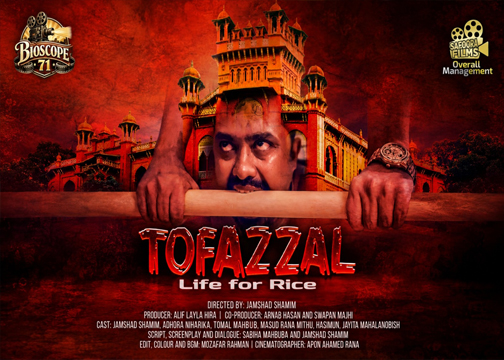
কিছু চলচ্চিত্র শেষ হলে গল্পও শেষ হয়ে যায়। আবার কিছু চলচ্চিত্র শেষ হওয়ার পরই দর্শকের ভেতরে তার আসল যাত্রা শুরু করে। জামশাদ শামীম পরিচালিত স্বল্পদৈর্ঘ্য চলচ্চিত্র ‘Tofazzal: Life for Rice’ তেমনই একটি ছবি। ২০২৪ সালের ১৮ সেপ্টেম্বর ঢাকা বিশ্ববিদ্যালয়ের ফজলুল হক মুসলিম হলে তোফাজ্জল হোসেনকে চুরির সন্দেহে আটক, মারধর, মাঝখানে ভাত খাওয়ানো এবং পরে আবার নির্যাতনের মর্মান্তিক ঘটনাকে কেন্দ্র করে নির্মিত হয়েছে চলচ্চিত্রটি।
ছবির শুরুতেই তোফাজ্জলকে আমরা দেখি একজন মানুষ হিসেবে—কেবল একটি আলোচিত হত্যাকাণ্ডের ‘ভিকটিম’ হিসেবে নয়। এরপর ধীরে ধীরে তাঁকে ঘিরে তৈরি হয় সন্দেহ, জেরা ও সংঘবদ্ধ নিষ্ঠুরতার বলয়। দর্শক আগে মানুষটিকে দেখে, তারপর দেখে তাঁর ওপর নেমে আসা সহিংসতা। এই নির্মাণকৌশল শুরু থেকেই ছবিটির মানবিক আবেদনকে প্রতিষ্ঠা করে।
চলচ্চিত্রটির সবচেয়ে কার্যকর দৃশ্যভাষা তৈরি হয় একজনের বিপরীতে অনেকজনকে দাঁড় করিয়ে। কখনো বসিয়ে, কখনো মেঝেতে ফেলে, কখনো চারদিক থেকে ঘিরে তোফাজ্জলকে জিজ্ঞাসাবাদ ও নির্যাতনের দৃশ্যগুলোতে ক্ষমতার ভয়াবহ অসমতা স্পষ্ট হয়ে ওঠে। দুজন শিক্ষক পরিস্থিতিতে হস্তক্ষেপের চেষ্টা করলেও শেষ পর্যন্ত তাঁদের অসহায়ত্ব প্রকাশ পায়। ফলে প্রশ্নটি শুধু কে আঘাত করেছিল, সেখানে থেমে থাকে না; বরং আরও বড় হয়ে ওঠে—এত মানুষের মধ্যে একজন অসহায় মানুষকে বাঁচানোর মতো প্রতিরোধ কেন তৈরি হলো না?
ছবিটির সবচেয়ে মর্মস্পর্শী প্রতীক নিঃসন্দেহে ভাতের থালা। নির্যাতনের মধ্যেই তোফাজ্জলকে খাবার দেওয়া হয়। তাঁর কাছে জানতে চাওয়া হয়, খাবার কেমন হয়েছে। অথচ সেই সাময়িক মানবিকতার পরই আবার ফিরে আসে নির্যাতন। এখানেই Life for Rice নামটির নির্মম তাৎপর্য স্পষ্ট হয়—একজন ক্ষুধার্ত মানুষকে আমরা ভাত দিতে পারলাম, কিন্তু তাঁকে বাঁচতে দিলাম না। ভাতের থালাটি তাই নিছক একটি অনুষঙ্গ থাকে না; হয়ে ওঠে মানবিকতা ও নিষ্ঠুরতার এক অস্বস্তিকর প্রতীক।
তোফাজ্জলের অসহায় দৃষ্টি ও শরীরী ভাষা ছবিটির আবেগের বড় অংশ বহন করেছে। তাঁকে প্রচলিত অর্থে ‘নায়ক’ বানানোর চেষ্টা নেই; একজন বিপন্ন মানুষ হিসেবে তাঁর উপস্থিতিই যথেষ্ট শক্তিশালী। ছবিটি নির্যাতনের কক্ষেও আটকে থাকে না। তোফাজ্জলের স্মৃতি, আপনজনের বেদনা, সামাজিক প্রতিক্রিয়া ও পুলিশি উপস্থিতির মধ্য দিয়ে ঘটনার পরিসর আরও বিস্তৃত হয়েছে।
তবে নির্মাণটি ত্রুটিমুক্ত নয়। তোফাজ্জলকে ঘিরে থাকা কয়েকটি পার্শ্বচরিত্র কিছুটা একমাত্রিক থেকে গেছে। তাদের দ্বিধা, ভয় কিংবা সংঘবদ্ধ মানসিকতার ভেতরের টানাপোড়েন আরও খানিকটা উন্মোচিত হলে ঘটনার মনস্তাত্ত্বিক গভীরতা বাড়তে পারত। একইভাবে কিছু দৃশ্যে আবহসংগীতের ব্যবহার আরও সংযত হলে দৃশ্যের নিজস্ব শক্তি আরও স্পষ্ট হয়ে উঠত। বাস্তব ঘটনাটি নিজেই এত মর্মান্তিক যে কোথাও কোথাও সংগীতের চেয়ে নীরবতাই হয়তো আরও তীব্র হয়ে উঠতে পারত। তবে এসব সীমাবদ্ধতা ছবিটির মূল মানবিক বক্তব্যকে ম্লান করে না।
চলচ্চিত্রটির প্রযোজক আলিফ লায়লা হীরা; সহ-প্রযোজনায় অর্ণব হাসান ও স্বপন মাঝি। চিত্রনাট্য ও সংলাপে সাবিহা মাহবুবা ও জামশাদ শামীম, চিত্রগ্রহণে অপুন আহমেদ রানা এবং সম্পাদনা, কালার ও আবহসংগীতে মোজাফফর রহমান। অভিনয়ে রয়েছেন জামশাদ শামীম, অধরা নিহারিকা, তুমাল মাহবুব, মাসুদ রানা মিঠুসহ অনেকে।
শেষ পর্যন্ত Tofazzal: Life for Rice একটি হত্যাকাণ্ডের পুনর্নির্মাণে সীমাবদ্ধ থাকে না। এটি আমাদের সামনে তুলে ধরে এক ভয়ংকর সামাজিক রূপান্তর—সন্দেহ থেকে অভিযোগ, অভিযোগ থেকে রায়, রায় থেকে শাস্তি; আর মাঝখান থেকে হারিয়ে যায় আইন, বিবেক ও মানবিকতা।
সংবাদ একদিন পুরোনো হয়, ভাইরাল ছবি টাইমলাইনে হারিয়ে যায়, নতুন ঘটনা পুরোনো ঘটনাকে আড়াল করে। কিন্তু শিল্প কখনো কখনো বিস্মৃতির বিরুদ্ধে দাঁড়ায়। ‘তোফাজ্জল’ সেই বিস্মৃতির বিপরীতে আমাদের সামনে একটি আয়না ধরে।
একজন মানুষ ক্ষুধার্ত ছিলেন। তাঁকে ভাত দেওয়া হয়েছিল। কিন্তু তাঁকে বাঁচতে দেওয়া হয়নি।
এই তিনটি বাক্যেই যেন চলচ্চিত্রটির সবচেয়ে নির্মম সত্যটি ধরা পড়ে। আর ছবি শেষ হওয়ার পর প্রশ্নটি তোফাজ্জলকে ছাপিয়ে ফিরে আসে আমাদের নিজেদের দিকে—
সেই ভিড়ের মধ্যে আমি থাকলে, আমি কী করতাম?
লেখক: এ বি এম কামরুল হাসান, প্রবাসী চিকিৎসক ও কলামিস্ট
Some films end, and so does the story. But with others, the audience's real journey begins only after the film ends. The short film ‘Tofazzal: Life for Rice’, directed by Jamshad Shamim, is one such film. It is based on the tragic event of September 18, 2024, at Fazlul Huq Muslim Hall of Dhaka University, where Tofazzal Hossain was detained on suspicion of theft, beaten, fed a meal of rice in between, and then tortured again.
At the beginning of the film, we see Tofazzal as a human being—not merely as the 'victim' of a widely discussed murder. Then, gradually, a circle of suspicion, interrogation, and mob cruelty forms around him. The audience sees the man first, and then witnesses the violence unleashed upon him. This narrative approach establishes the film's human appeal right from the start.
The film's most effective visual language is created by positioning many against one. In scenes of interrogation and torture—where Tofazzal is sometimes made to sit, sometimes thrown to the floor, and surrounded from all sides—the horrific imbalance of power becomes striking. Though two teachers attempt to intervene, their ultimate helplessness is laid bare. As a result, the question does not stop at who struck the blows; rather, it grows larger—among so many people, why was there no resistance strong enough to save a helpless human being?
The most poignant symbol in the film is undoubtedly the plate of rice. Tofazzal is given food right in the middle of the torture. He is asked how the food tastes. Yet, immediately after that brief moment of humanity, the torture resumes. Here, the cruel significance of the title Life for Rice becomes clear—we could give a hungry man rice, but we did not let him live. The plate of rice thus ceases to be a mere prop; it becomes an uncomfortable symbol of humanity intertwined with cruelty.
Tofazzal’s helpless gaze and body language carry a major portion of the film's emotional weight. There is no attempt to turn him into a conventional ‘hero’; his presence as a vulnerable, endangered human being is powerful enough on its own. The film does not remain confined to the torture room either. Through Tofazzal’s memories, the grief of his loved ones, social reactions, and the presence of the police, the scope of the narrative expands further.
However, the production is not without flaws. A few side characters surrounding Tofazzal remain somewhat one-dimensional. Had their hesitation, fear, or the psychological conflict within the mob mindset been explored a bit more, the psychological depth of the event would have increased. Similarly, a more restrained background score in certain scenes would have allowed the raw power of the visuals to shine through more clearly. The real event itself is so tragic that in some places, silence might have resonated even more intensely than music. Yet, these limitations do not diminish the film’s core human message.
The film is produced by Alif Laila Hira and co-produced by Arnab Hasan and Swapan Majhi. The screenplay and dialogues are by Sabiha Mahbuba and Jamshad Shamim, cinematography by Apun Ahmed Rana, and editing, color grading, and background score by Mozaffar Rahman. The cast includes Jamshad Shamim, Adhora Niharika, Tumal Mahbub, Masud Rana Mithu, and others.
Ultimately, Tofazzal: Life for Rice is not limited to a mere reenactment of a murder. It confronts us with a frightening social transformation—from suspicion to allegation, from allegation to verdict, and from verdict to punishment; while in between, the law, conscience, and humanity vanish.
News becomes old after a day, viral photos get lost in the timeline, and new events overshadow the old ones. But art sometimes stands against oblivion. ‘Tofazzal’ holds a mirror up to us in opposition to that forgetfulness.
A man was hungry. He was given rice. But he was not allowed to live.
These three sentences capture the film's most brutal truth. And after the movie ends, the question reaches beyond Tofazzal and turns back toward ourselves—
If I were in that crowd, what would I have done?
Author: ABM Kamrul Hasan, Expatriate Physician and Columnist