Long-standing pressures on Bangladesh’s industrial sector have now become visible in the production figures. Industrial production declined by 0.28 percent in the January–March quarter of the 2025–26 fiscal year. According to provisional data from the Bangladesh Bureau of Statistics (BBS), industrial growth stood at 3.33 percent during the same period a year earlier, but has now turned negative. This is the first contraction in industrial production since the second quarter of 2020, when the country was hit by nationwide lockdowns during the COVID-19 pandemic.
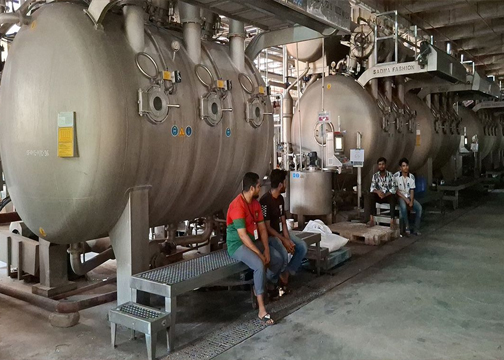
There is little scope to view this decline as an isolated statistical setback. Uncertainty over energy supplies, high interest rates, rising borrowing costs, weak export demand, and stagnant private investment have placed the manufacturing sector under pressure from multiple directions. Economists say that although factories have production capacity, irregular gas and electricity supplies and uncertainty surrounding investment are preventing businesses from fully utilizing that capacity.
The weakness in the industrial sector has also affected the broader economy. GDP growth fell to 2.22 percent during the same quarter, compared with 4.53 percent a year earlier. Growth in both agriculture and services also slowed. This suggests that the crisis is no longer confined to industry; signs of a broader slowdown are becoming evident across all three major sectors of the economy.
The biggest concern, however, is investment. Political and policy uncertainty has made entrepreneurs cautious about new investments, while banks are increasingly reluctant to take risks by lending to productive sectors. As a result, the economy risks becoming trapped in a dangerous cycle of low investment, declining production, fewer jobs, and weak economic growth.
Under these circumstances, incentives or subsidized loans alone will not be enough. Reviving the industrial sector requires reliable energy supplies, affordable financing, confidence in the banking system, political stability, and predictable long-term policies. Particularly as Bangladesh moves toward graduation from the Least Developed Country (LDC) category, improving productivity and strengthening industrial competitiveness are no longer optional—they are essential for the country’s economic survival.
Therefore, the 0.28 percent decline in industrial production should not be dismissed as a temporary statistical setback. It is a warning signal of deeper structural weaknesses in Bangladesh’s economy. Unless these challenges are addressed promptly, their impact on exports, employment, and long-term economic growth could become increasingly severe.
Author: Dr. Abul Hasnat Milton
Editor-in-Chief, The Source News Bangla