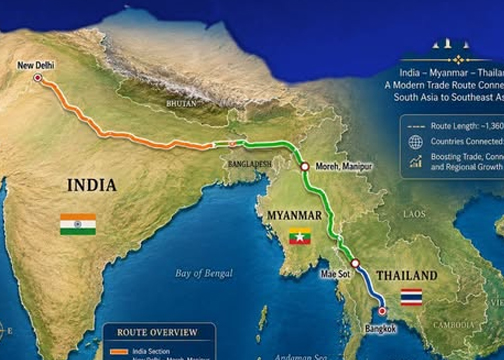
আঞ্চলিক ভূ-রাজনীতি ও অর্থনৈতিক সংযোগের ক্ষেত্রে এক গুরুত্বপূর্ণ মাইলফলক হিসেবে স্থান পেতে যাচ্ছে ভারত-মিয়ানমার-থাইল্যান্ড (IMT) ত্রিপক্ষীয় হাইওয়ে প্রকল্প। সম্প্রতি মিয়ানমারের জান্তা প্রধান প্রেসিডেন্ট মিন অং হ্লাইং-এর ব্যাংকক সফরের পর প্রকাশিত এক যৌথ বিবৃতিতে মিয়ানমার ও থাইল্যান্ড এ মেগা প্রকল্প দ্রুত এগিয়ে নেওয়ার দৃঢ় অঙ্গীকার পুনর্ব্যক্ত করেছে। এই উদ্যোগটি থাইল্যান্ডের ব্যাংকক থেকে মিয়ানমারের ভেতর দিয়ে ভারতের উত্তর-পূর্বাঞ্চলীয় রাজ্য মণিপুরের মোরেহ (Moreh) পর্যন্ত প্রায় ১,৩৬০ কিলোমিটার দীর্ঘ সড়ক যোগাযোগ স্থাপন করবে।
প্রকল্পের ভূ-রাজনৈতিক ও অর্থনৈতিক তাৎপর্য
১. ভারতের 'অ্যাক্ট ইস্ট' নীতি ও আসিয়ান সংযোগ: ভারতের 'অ্যাক্ট ইস্ট' (Act East) নীতির অন্যতম মূল স্তম্ভ এই হাইওয়ে। এটি ভারতের স্থলাবেষ্টিত উত্তর-পূর্বাঞ্চলকে সরাসরি আসিয়ান (ASEAN) বাজারের সাথে যুক্ত করবে।
২. বাণিজ্য ও অর্থনৈতিক সুবিধা: সড়কটি চালু হলে তিন দেশের মধ্যে পণ্য পরিবহন সময় ও খরচ নাটকীয়ভাবে কমে আসবে। কৃষি, বস্ত্র, যন্ত্রাংশ এবং ইলেকট্রনিক্স খাতে দ্বিপাক্ষিক ও বহুপাক্ষিক বাণিজ্য বহুগুণ বৃদ্ধি পাবে।
৩. পর্যটন ও সাংস্কৃতিক মেলবন্ধন: দক্ষিণ এশিয়া ও দক্ষিণ-পূর্ব এশিয়ার মধ্যে সড়কপথে যোগাযোগ সহজ হওয়ায় স্থলজ পর্যটন (overland tourism) এবং ঐতিহাসিক সাংস্কৃতিক আদান-প্রদান আরও গতি পাবে।
প্রধান চ্যালেঞ্জ ও প্রতিবন্ধকতা
অঙ্গীকার সত্ত্বেও প্রকল্পটির পূর্ণ বাস্তবায়ন বেশ কিছু জটিল চ্যালেঞ্জের সম্মুখীন:
• মিয়ানমারের অভ্যন্তরীণ অস্থিরতা: ২০২১ সালের সামরিক অভ্যুত্থানের পর থেকে মিয়ানমারের কাচিন, কারেন ও চিন রাজ্যে বিদ্রোহী গোষ্ঠীগুলোর সাথে সেনাবাহিনীর চলমান সংঘাত অবকাঠামো নির্মাণের প্রধান বাধা।
• ভৌগোলিক জটিলতা: পাহাড়ি ভূখণ্ড, ঘন জঙ্গল এবং দীর্ঘ বর্ষাকাল নির্মাণকাজ ও নিয়মিত রক্ষণাবেক্ষণকে কঠিন করে তোলে।
• তহবিল ও অর্থায়ন: অবকাঠামোগত মান বজায় রাখা এবং সেতু নির্মাণের অর্থায়ন নিশ্চিত করা একটি বড় চ্যালেঞ্জ।
ভবিষ্যৎ পথরেখা
ভারতের আসাম থেকে শুরু করে কম্বোডিয়া, লাওস ও ভিয়েতনাম পর্যন্ত এই হাইওয়ে সম্প্রসারণের পরিকল্পনাও রয়েছে, যা ভবিষ্যতে এক বিশাল 'ইন্ডিয়া-আসিয়ান ইকোনমিক করিডোর'-এ পরিণত হতে পারে। মিয়ানমার ও থাইল্যান্ডের সাম্প্রতিক যৌথ প্রতিশ্রুতি স্পষ্ট করে যে, অভ্যন্তরীণ রাজনৈতিক জটিলতা সত্ত্বেও আঞ্চলিক অর্থনৈতিক স্বার্থে এই মহাসড়কটি অত্যন্ত জরুরি।
পদ্ধতিগত নিরাপত্তা প্রদান, সীমান্ত ব্যবস্থাপনা সহজীকরণ এবং অবকাঠামোগত অর্থায়ন দ্রুত নিশ্চিত করতে পারলে এই ত্রিপক্ষীয় হাইওয়ে দক্ষিণ ও দক্ষিণ-পূর্ব এশিয়ার অর্থনৈতিক দৃশ্যপট বদলে দিতে কার্যকর ভূমিকা রাখবে।
লেখক: ড.আবুল হাসনাৎ মিল্টন, প্রধান সম্পাদক, দ্যা সোর্স নিউজ বাংলা
The India-Myanmar-Thailand (IMT) Trilateral Highway project is set to become a major milestone in regional geopolitics and economic connectivity. Following a recent visit to Bangkok by Myanmar's junta chief, President Min Aung Hlaing, a joint statement issued by Myanmar and Thailand reaffirmed their firm commitment to fast-tracking this mega project. The initiative will establish a road connection spanning approximately 1,360 kilometers, running from Bangkok, Thailand, through Myanmar, to Moreh in the northeastern Indian state of Manipur.
Geopolitical and Economic Significance of the Project
1. India's 'Act East' Policy and ASEAN Connectivity: This highway serves as one of the key pillars of India's 'Act East' policy. It will directly connect India's landlocked northeastern region with the ASEAN market.
2. Trade and Economic Benefits: Once operational, the road will dramatically reduce the time and cost of cargo transportation among the three nations. Bilateral and multilateral trade in sectors such as agriculture, textiles, machinery, and electronics will grow exponentially.
3. Tourism and Cultural Ties: By facilitating easier road transit between South Asia and Southeast Asia, overland tourism and historical-cultural exchanges will gain significant momentum.
Key Challenges and Obstacles
Despite commitments, the full implementation of the project faces several complex challenges:
• Internal Instability in Myanmar: Ongoing conflicts between the military and rebel groups in Myanmar's Kachin, Karen, and Chin states since the 2021 military coup present a primary obstacle to infrastructure construction.
• Geographical Complexities: Mountainous terrain, dense jungles, and prolonged monsoon seasons complicate construction and routine maintenance.
• Funding and Financing: Maintaining infrastructure standards and securing funding for bridge construction remain major hurdles.
Future Roadmap
Plans are also in place to extend this highway from Assam, India, all the way to Cambodia, Laos, and Vietnam, which could potentially evolve into a massive 'India-ASEAN Economic Corridor' in the future. The recent joint commitment from Myanmar and Thailand makes it clear that, despite internal political complexities, this highway is vital for regional economic interests.
If systematic security can be ensured, border management simplified, and infrastructure financing promptly secured, this trilateral highway will play a transformative role in reshaping the economic landscape of South and Southeast Asia.
Author: Dr. Abul Hasnat Milton, Editor-in-Chief, The Source News Bangla