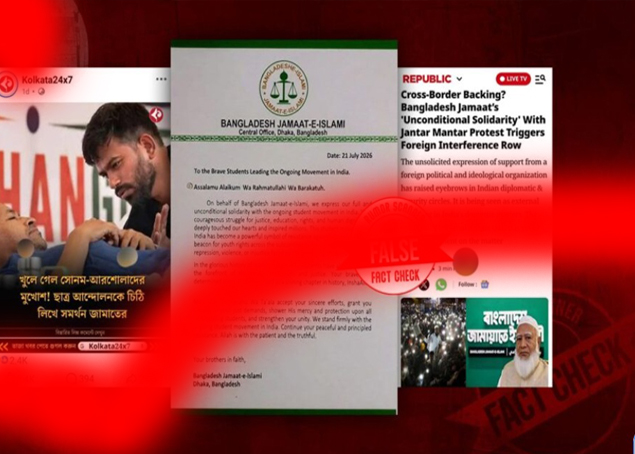
ভারতের রাজধানী দিল্লিতে চলমান ছাত্র আন্দোলনকে ঘিরে নতুন করে তৈরি হয়েছে আন্তর্জাতিক বিতর্ক। বাংলাদেশ জামায়াতে ইসলামীর নামে প্রকাশিত একটি কথিত চিঠিতে আন্দোলনরত শিক্ষার্থীদের প্রতি ‘পূর্ণ ও নিঃশর্ত সংহতি’ প্রকাশের দাবি করা হয়েছে।
চিঠিটির সত্যতা নিশ্চিত করেনি কোনো সংশ্লিষ্ট কর্তৃপক্ষ। ফলে আপাতত এর বক্তব্যকে প্রমাণিত তথ্য হিসেবে দেখার সুযোগ নেই। কিন্তু নথিটি ঘিরে যে বিতর্ক তৈরি হয়েছে, তা নিছক একটি চিঠির সত্যতা যাচাইয়ের মধ্যে সীমাবদ্ধ থাকছে না। এর সঙ্গে যুক্ত হচ্ছে জাতীয় নিরাপত্তা, সার্বভৌমত্ব এবং একটি দেশের অভ্যন্তরীণ নাগরিক আন্দোলনে বিদেশি রাজনৈতিক সংগঠনের সম্ভাব্য ভূমিকার মতো স্পর্শকাতর প্রশ্ন।
কথিত চিঠিতে ভারতের ছাত্রদের ন্যায়বিচার, শিক্ষা, অধিকার ও মানবিক মর্যাদার দাবির প্রতি সমর্থন জানানো হয়েছে। একই সঙ্গে আন্দোলনকারীদের ওপর দমন-পীড়নের নিন্দা করে শান্তিপূর্ণ প্রতিরোধ অব্যাহত রাখার আহ্বানও রয়েছে। দিল্লিতে NEET পরীক্ষার প্রশ্নপত্র ফাঁসের অভিযোগকে কেন্দ্র করে বিক্ষোভ যখন তীব্র, তখনই এমন একটি চিঠির প্রকাশ নতুন মাত্রা যোগ করেছে।
নিরাপত্তা বিশ্লেষকদের একাংশের মতে, চিঠিটি সত্য প্রমাণিত হলে এর রাজনৈতিক তাৎপর্য গভীর হতে পারে। কারণ, বিদেশি কোনো রাজনৈতিক বা আদর্শিক সংগঠনের প্রকাশ্য সমর্থন একটি অভ্যন্তরীণ ছাত্র আন্দোলনকে বহিরাগত প্রভাবের আলোচনায় নিয়ে আসতে পারে। এতে আন্দোলনের মূল দাবি আড়ালে পড়ে গিয়ে বিতর্কের কেন্দ্রবিন্দু হয়ে উঠতে পারে বিদেশি হস্তক্ষেপের প্রশ্ন।
অন্যদিকে, চিঠিটি ভুয়া হলে সেটিও কম গুরুত্বপূর্ণ নয়। কারণ, এমন একটি নথি পরিকল্পিতভাবে ছড়িয়ে দিয়ে কোনো আন্দোলনের ভাবমূর্তি ক্ষুণ্ন করা বা তাকে উগ্রপন্থী ও বিদেশি প্রভাবাধীন হিসেবে তুলে ধরার চেষ্টা হতে পারে।
সুতরাং, এই মুহূর্তে সবচেয়ে জরুরি হলো চিঠিটির উৎস, সত্যতা ও প্রেক্ষাপট নিরপেক্ষভাবে যাচাই করা। প্রমাণ ছাড়া কোনো সিদ্ধান্তে পৌঁছানো যেমন ঝুঁকিপূর্ণ, তেমনি সত্যতা প্রমাণিত হলে বিষয়টি কেবল রাজনৈতিক নয়—কূটনৈতিক ও নিরাপত্তাগত দৃষ্টিকোণ থেকেও তাৎপর্যপূর্ণ হয়ে উঠতে পারে।
লেখক: এ বি এম কামরুল হাসান,কলামিস্ট ও রাজনৈতিক বিশ্লেষক।
A new international controversy has emerged surrounding the ongoing student protests in India’s capital, New Delhi. A purported letter issued in the name of Bangladesh Jamaat-e-Islami allegedly expressed “full and unconditional solidarity” with the protesting students.
No relevant authority has confirmed the authenticity of the letter. Therefore, its contents cannot, at this stage, be treated as verified information. However, the controversy surrounding the document is no longer limited to the question of whether the letter itself is genuine. It has also raised sensitive issues concerning national security, sovereignty, and the possible involvement of foreign political organizations in a country’s internal civic movements.
The purported letter reportedly expressed support for Indian students’ demands for justice, education, rights, and human dignity. It also condemned alleged repression against the protesters and called for the continuation of peaceful resistance. The emergence of such a letter at a time when protests in Delhi have intensified over allegations of question paper leaks in the NEET examination has added a new dimension to the controversy.
According to some security analysts, if the letter is proven to be genuine, it could carry significant political implications. Public support from a foreign political or ideological organization could bring an internal student movement under scrutiny for possible external influence. As a result, the movement’s original demands could be overshadowed by questions of foreign interference.
On the other hand, if the letter is fabricated, that too would be significant. Such a document could potentially be circulated deliberately to damage the image of a movement or portray it as extremist and influenced by foreign actors.
Therefore, the most important task at this moment is to independently verify the source, authenticity, and context of the letter. Reaching any conclusion without evidence would be risky. At the same time, if its authenticity is established, the matter could become significant not only politically but also from diplomatic and national security perspectives.
Author: A. B. M. Kamrul Hasan, Columnist and Political Analyst.